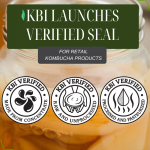
Los Angeles, CA August 28, 2025 — After more than a decade of advocacy, research, and industry collaboration, Kombucha Brewers International (KBI) announces the debut of the KBI Verified Seal for retail kombucha products  — a landmark achievement in protecting the integrity of fermented kombucha and empowering consumers with greater transparency by providing professional brewers with a powerful tool to differentiate their craft and offer consumers a trusted way to recognize authenticity.

For over a decade, KBI has worked with brewers, scientists, and regulatory partners to create a reliable product standard that distinguishes fermented kombucha from shelf-stable or synthetically formulated “kombucha-like” products. As the category has grown, so too has consumer confusion and with it the risk of consumers being misled by beverages marketed as kombucha despite lacking fermentation or probiotic activity.

This milestone builds on KBI’s ongoing work to establish clear industry-wide standards, including the launch of the Kombucha Code of Practice in 2020, which was the first published framework outlining kombucha product definitions, labeling requirements, and quality benchmarks. 

The first brand to carry the Verified Seal is the category’s pioneer, GT’s Living Foods, which announced the decision during the company’s 30th anniversary celebration at Natural Products Expo West 2025. 

“This seal is the culmination of countless hours from passionate brewers across the globe,” said GT Dave, Founder of GT’s Living Foods. “I’m honored to be the first to carry it, not just for my brand but for the future of kombucha. It’s an opportunity to help consumers better understand what real fermentation looks like and why it matters.”

The KBI Verified Seal Program establishes a process to confirm that kombucha products are brewed according to time-honored fermentation methods. 

The program includes three seal categories: 

  • Raw (Not From Concentrate): Freshly fermented and never concentrated, representing traditional raw kombucha.
  • Concentrate: Brewed kombucha that is concentrated and then reconstituted, allowing for shelf stability while preserving core fermentation characteristics.
  • Pasteurized: Heat-treated kombucha that offers a different balance of taste and consistency, though it may no longer contain live cultures.

About Kombucha Brewers International

Kombucha Brewers International is the leading global trade association committed to promoting, supporting and protecting commercial kombucha brewers around the world. Founded in 2014, KBI provides education, advocacy, and support to advance the art and science of kombucha fermentation. Through programs like the Verified Seal, KBI helps ensure product integrity and fosters consumer trust across the industry.

For more information about the Verified Seal Program, visit https://kombuchabrewers.org/kbi-verified-seal-program/

Media Contact:
Kendra Sepulveda, Director of KBI: Director@kombuchabrewers.org
www.kombuchabrewers.org

KBI Verified Seal Program – Producer FAQ

What is the KBI Verified Seal Program?

The KBI Verified Seal Program is a KBI initiative that certifies kombucha producers who adhere to the KBI Code of Practice. It signals to retailers, distributors, and consumers that your products meet recognized industry standards for authenticity, safety, and quality.

Who is eligible to apply?

Any active KBI member in good standing may apply for verification. Both small and large-scale brewers are eligible. 

What are the benefits of earning the Verified Seal?

  • Credibility & trust: Demonstrates compliance with industry best practices.
  • Market advantage: Sets your brand apart from non-verified competitors.
  • Trade recognition: Builds confidence with buyers, retailers, and distributors.
  • Marketing value: Verified companies are promoted by KBI through official channels.

What does the verification process involve?

The process includes:

  1. Submit application and initial fee of $150. 
  2. Fill out the process form.
  3. Once you receive your acceptance email that verifies your eligibility, you can pay the fee according to your level of production. 
  4. You will also submit a notarized affidavit supporting your process submission. One will be digital, and the physical document will be mailed to Carson, CA.
  5. Pay the verification fee.
  6. We will send you the seal and you can then use it on your label and in your promotional material. 

How long does the process take?

Typically, 4–6 weeks.

How much does it cost?

Fees are based on company size and production volume. A full fee schedule is available from KBI upon request.

How long is the seal valid?

The Verified Seal is valid for 12 months. Renewal is required annually and involves a simplified review process.

What happens if a company does not meet requirements?

Applicants who do not pass will receive a written explanation with specific corrective actions. They may reapply after making the necessary adjustments.

Does the program cover all kombucha products?

Yes. Bottled, draft, and specialty formats are eligible, provided they comply with the Code of Practice.

How is compliance maintained after approval?

  • Annual renewal review.
  • Ongoing compliance with the Code of Practice.

How can the seal be used once earned?

Verified companies may display the Verified Seal on:

  • Product packaging and labels.
  • Marketing materials.
  • Company websites and social media.

Fee Structure: Application Processing fee $150 

Tiers are as follows:

  • Tier 7: $2,000
  • Tier 6: $1,500
  • Tier 5: $1,000
  • Tier 4: $850
  • Tier 3: $700
  • Tier 2: $500
  • Tier 1: $350
  • Nano: $200

Where can I learn more or begin my application?

Contact admin@kombuchabrewers.org or visit KBI’s website link for details.
 

Winners Announced in Third International Kombucha Competition 

The 2024 Kombucha Kup Awards saw 7 winners from around the world


Los Angeles, CA – The inaugural Kombucha Kup Awards were held in Reno, NV on May 6 & 7, 2024. The international competition is the third of its kind, allowing commercial kombucha brewers from around the world to have their products judged by industry experts and analyzed for appearance, aroma, taste, mouthfeel and overall quality.

The Kombucha Kup Awards were developed by Kombucha Brewers International, the leading global trade association for kombucha brewers, as a way for brewers to get the kind of professional feedback for their beverages that the World Beer Cup offers beer brewers

In all, 24 entries were received from 5 countries. This year’s awards consisted of five categories for kombucha– Original, Fruited, Ginger/Spice, Floral/Herbs and Hops– along with one category for jun (a honey-based kombucha) and one for hard kombucha. Winners were announced at the kombucha industry’s annual conference, KombuchaKon, on May 7th and are as follows:


Original:

Bronze: ValleSane, “Natural” (Mexico)


Fruited:

Silver: Rocky Mountain Cultures, “Tangy Tropical Burst” (Colorado, United States)

Gold: I’m Alive Kombucha, “Red Grape Black Currant” (Korea)


Ginger/Spice:

Silver: All Good Gene’s Kombucha, “Just Ginger” (Taiwan)


Hops:

Gold: Rocky Mountain Cultures, “Hoppy Cultures” (Colorado, United States)


Jun: 

Silver: Rocky Mountain Cultures, “Pollen Punch” (Colorado, United States)


Most Innovative Kombucha:

“Rocky Mountain Cultures” (Colorado, United States)


About Kombucha Brewers International:

Kombucha Brewers International (KBI) is a non-profit trade association that represents the commercial Kombucha category globally. KBI strives to promote, protect and enhance the overall well-being of the industry by creating an open line of communication between brewers, consumers and regulators while advancing the industry through advocacy, education, research, and modern legislation. To learn more, visit www.kombuchabrewers.org.


# # #


Winners Announced in First International Kombucha Competition 

The 2022 Kombucha Kup Awards saw 21 winners from around the world


Los Angeles, CA – The inaugural Kombucha Kup Awards were held in Long Beach, CA on March 28 & 29, 2022. The international competition is the first of its kind, allowing commercial kombucha brewers from around the world to have their products judged by industry experts and analyzed for appearance, aroma, taste, mouthfeel and overall quality.

The Kombucha Kup Awards were developed by Kombucha Brewers International, the leading global trade association for kombucha brewers, as a way for brewers to get the kind of professional feedback for their beverages that the World Beer Cup offers beer brewers

In all, 97 entries were received from 11 countries. This year’s awards consisted of five categories for kombucha– Original, Fruited, Ginger/Spice, Floral/Herbs and Hops– along with one category for jun (a honey-based kombucha) and one for hard kombucha. Winners were announced at the kombucha industry’s annual conference, KombuchaKon, on April 1 and are as follows:


Original:

Bronze: Kaldi Kombucha, “Typica” (Guatemala)

Silver: Lao Kombucha, “Crystal” (Quebec, Canada)

Gold: Happy Gut Sanctuary, “Amaterasu” (New York, United States)


Fruited:

Bronze: Boochy Call Kombucha, “Full Monty” (Maryland, United States)

Silver: Elixir Kombucha, “Grapefruit, Hibiscus & Orange Peel” (Kentucky, United States)

Gold: Cloud Mountain Kombucha, “Autumn Mary” (Illinois, United States)


Ginger/Spice:

Bronze: Swiss Kombucha Company, “Carrot Ginger Turmeric” (Switzerland)

Silver: The Federal Brewing Company, “Imperial Gold” (Maryland, United States)

Gold: Cloud Mountain Kombucha, “Lemon Balm Ginger” (Illinois, United States)


Floral/Herbs:

Bronze: Nokkos, “Heather & Gooseberry” (Finland)

Silver: Happy Gut Sanctuary, “Echinacea” (New York, United States)

Gold: Swiss Kombucha Co, “Elderflower, Lime & Mint” (Switzerland)


Hops:

Bronze: Ninja Kombucha, “Dry Hopped Lemon Ginger” (Virginia, United States)

Silver: Yugen Kombucha, “Grapefruit Hops” (Belgium)

Gold: Spring Branch Kombucha, “Lemon Hops” (Missouri, United States)


Jun: 

Bronze: Revel Kombucha, “Pink Moment” (California, United States)

Silver: Revel Kombucha, “Hoppy Valley” (California, United States)

Gold: Happy Gut Sanctuary, “Dragon’s Nectar” (New York, United States)


Hard Kombucha:

Bronze: Strainge Beast by Sierra Nevada, “Watermelon, Sea Salt, Lime & Mint” (California, United States)

Silver: Arlo Boozy Kombucha, “Mango” (British Columbia, Canada)

Gold: Arlo Boozy Kombucha, “Raspberry” (British Columbia, Canada)


About Kombucha Brewers International:

Kombucha Brewers International (KBI) is a non-profit trade association that represents the commercial Kombucha category globally. KBI strives to promote, protect and enhance the overall well-being of the industry by creating an open line of communication between brewers, consumers and regulators while advancing the industry through advocacy, education, research, and modern legislation. To learn more, visit www.kombuchabrewers.org.


# # #


FOR IMMEDIATE RELEASE: World Kombucha Day Returns Feb. 21 as Brewers Push for Passage of the KOMBUCHA Act

Kombucha producers seek protection for the “Tea of Immortality” in Congress

Los Angeles, CA – World Kombucha Day returns for its third year on February 21 to celebrate kombucha, a craft fermented beverage known for its probiotic benefits. This year the day converges with the efforts of commercial U.S kombucha brewers to pass a bill aptly named the KOMBUCHA Act that removes a long-standing thorn in the industry.

World Kombucha Day was established to serve as an international celebration of kombucha, a fermented tea drink that has exploded onto the commercial market in recent decades and led a resurgence of interest in fermented products. Kombucha is made by adding a symbiotic culture of bacteria and yeast (SCOBY) to a solution of tea and sugar and allowing it to ferment for several weeks. The cultures transform that tea into a naturally carbonated beverage with a sweet-tart flavor, full of healthy components like B vitamins, organic acids and antioxidants. With less than one third the sugar commonly found in soft drinks, health conscious consumers around the world are turning to kombucha to satisfy their thirst.

Today’s thriving kombucha industry shows no signs of slowing down. The kombucha category has been on a massive upward trajectory since 2014; it remains one of the fastest growing beverage categories and is poised to hit $8.5 billion worldwide by 2028.

“As Kombucha grows in popularity and becomes mainstream, we wanted to create a way for brewers to connect with consumers and celebrate a shared love of the tonic across the world while honoring its heritage,” said Hannah Crum, founder and president of Kombucha Brewers International, the leading trade association of kombucha brewers worldwide. “Kombucha is an ancient Chinese fermented elixir that has been consumed for more than 2,000 years, dating back as early as 221 B.C.; it is said that Chinese emperor Qin Shi Huang directed his alchemists to develop a longevity elixir to keep him young and healthy, and they developed a special concoction of Kombucha, the ‘elixir of life’. Now, we want to celebrate its ancient origin by creating a modern day of observance on ‘221’ – Feb. 21 for all Kombucha brewers and fans worldwide.”

In observance of World Kombucha Day, Kombucha brands, brewers and retailers around the world will be hosting happy hours, offering promos and unveiling new product releases. Reporters can contact Kombucha Brewers International to connect to kombucha brands in their area for local interviews.

U.S. kombucha brewers will also be using the opportunity to raise awareness for the KOMBUCHA Act (H.R. 2124/S. 892), a bill that amends the IRS code by raising the taxable alcohol-by-volume (ABV) for kombucha from 0.5% to 1.25%. 

Kombucha produces trace amounts of alcohol as part of the fermentation process, similar to sauerkraut, kimchi and other fermented foods. While this number hovers around 0.5%, it can change slightly when exposed to fluctuating temperatures due to raw kombucha’s live cultures. If left on loading docks or open shelves, it faces a risk of becoming out of compliance by a small fraction of a percent.

Once the product leaves the facility, kombucha producers grapple with uncertainty and fear that this potential mishandling may push their products over a threshold they say is unreasonably low, subjecting them to taxes and regulations intended for beer. The limit was first introduced during Prohibition and is significantly lower than globally accepted levels of trace alcohol (1-2% throughout Mexico, Canada, Australia and much of Europe).

The KOMBUCHA Act, introduced by Rep. Earl Blumenauer (D-OR-3) and Sen. Ron Wyden (D-OR), is the industry’s attempt to change this 100-year-old legislation. It has received bipartisan support and no opposition but has struggled to find an appropriate vehicle in Congress. With the potential for an omnibus appropriations bill, brewers are renewing efforts for its inclusion in such legislation. If they succeed, it will be a historic first for the kombucha industry, relieving a problem that has kept many small businesses from growing to meet demand.

For more information on World Kombucha Day, visit www.WorldKombuchaDay.com. To learn more about Kombucha Brewers International and the efforts of the organization, visit www.KombuchaBrewers.org.

About Kombucha Brewers International:

Kombucha Brewers International (KBI) is a non-profit trade association that represents the commercial Kombucha category globally. KBI strives to promote, protect and enhance the overall well-being of the industry by creating an open line of communication between brewers, consumers and regulators while advancing the industry through advocacy, education, research, and modern legislation. To learn more, visit www.kombuchabrewers.org.


# # #

FOR IMMEDIATE RELEASE: Growing Number of Californians in Congress Back Bill to Support Kombucha Industry

Lawmakers from California cosponsor bill to ease restrictions for raw kombucha producers.

Kombucha Brewers International

Los Angeles, CA –  Congressman Scott Peters (D-CA-52) and Congresswoman Doris Matsui (D-CA-6) are the latest congressional leaders from California to cosponsor a bill that proposes historic changes for the US kombucha industry. The KOMBUCHA Act (H.R. 2124/S. 892) would amend the Internal Revenue Code to increase the taxable alcohol-by-volume (ABV) threshold for kombucha from 0.5% to 1.25%, protecting raw kombucha from facing excise taxes intended for beer and relieving a burden that has plagued the young industry since its beginnings.

Mike Durighello of Whalebird Kombucha in San Luis Obispo, whose representative, Congressman Salud Carbajal (D-CA-24), cosponsored the bill earlier this year, sees the bill as essential for supporting local producers: “The KOMBUCHA Act will create jobs and grow the industry by reducing risk for the manufacturers, extending product shelf life, and lowering the barrier to entry for new brewers.”


The fermentation of kombucha produces a trace amount of alcohol, which protects the drink from pathogens. While this level hovers around 0.5% ABV, it is difficult to precisely control, as living cultures can change slightly when exposed to fluctuating temperatures. If left on loading docks or open shelves, raw kombucha faces a risk of becoming out of compliance.


This issue has forced small businesses to develop costly techniques, limit delivery areas, and shorten shelf life to remain in compliance with an alcohol limit they say is unreasonably low. The limit was first introduced during Prohibition and is significantly lower than globally accepted levels of trace alcohol (1-2% throughout Mexico, Canada, Australia and much of Europe).


Adam Gallegos, owner of Revel Kombucha Bar in Ojai, says the current legislation has restricted his distribution: “We would love to continue producing jun kombucha using traditional methods and be able to sell our beverages outside the local area, but… we worry that our beverages could fall slightly outside of compliance during transportation, which is a risk we can not afford to take.”


The KOMBUCHA Act, introduced by Rep. Earl Blumenauer (D-OR-3) and Sen. Ron Wyden (D-OR), is the industry’s attempt to change this 100-year-old legislation. It has received bipartisan support and no opposition but struggles to find a vehicle in Congress. To date, eight lawmakers from California have cosponsored the bill: Rep. Julia Brownley (D-CA-26), Rep. Salud Carbajal (D-CA-24), Rep. Lucille Roybal-Allard (D-CA-40), Rep. Jimmy Panetta (D-CA-20), Rep. Ted Lieu (D-CA-33), Rep. Scott Peters (D-CA-52), Rep. Doris Matsui (D-CA-6), and Senator Alex Padilla (D-CA).


Kombucha Brewers International, the leading trade association for kombucha producers, has created a petition for customers to urge their lawmakers to sign on in support of the bill. The petition, which has collected thousands of signatures, can be viewed here.


About Kombucha Brewers International: Kombucha Brewers International (KBI) is a non-profit trade association (501 c 6) that represents the commercial Kombucha Tea bottled beverage category globally. KBI strives to promote, protect and enhance the overall well-being of the industry by creating an open line of communication between brewers, consumers and regulators while advancing our industry through advocacy, education, research, and modern legislation.


###


Back

FOR IMMEDIATE RELEASE: Congressman Lloyd Smucker Joins Bipartisan Effort to Support Growing Kombucha Industry

The bill is also backed by Congressman Brian Fitzpatrick (R-PA-1)


Kombucha Brewers International

Washington, D.C. – Congressman Lloyd Smucker (R-PA-11) has cosponsored a piece of tax legislation that would ease restrictions for 21 kombucha producers in Pennsylvania and more than 600 across the US. The KOMBUCHA Act (H.R. 2124/S. 892) would amend the Internal Revenue Code to increase the taxable alcohol-by-volume (ABV) threshold for kombucha from 0.5% to 1.25%, protecting raw kombucha from being miscategorized as beer.

Kombucha, sometimes called “tea cider”, is a sweet and tangy fermented tea that has garnered a cult following since it hit shelves in 1995. Its fermentation produces a trace amount of alcohol to protect the live cultures from pathogens. This level is difficult to precisely control, as living cultures can change slightly if exposed to temperature fluctuations. If left on loading docks or on open grocery store shelves, raw kombucha faces the risk of exceeding the .5% ABV threshold and becoming subject to taxes intended for beer.

This has forced small businesses to develop costly techniques, limit delivery areas, and shorten shelf life to comply with the enforced limit, which they say is unreasonably low– the limit was first introduced during Prohibition and is significantly lower than globally accepted levels of trace alcohol (1-2% throughout Mexico, Canada, Australia and much of Europe).

Rep. Smucker joins fellow Pennsylvania Congressman Brian Fitzpatrick (R-PA-1) in cosponsoring the KOMBUCHA Act, which would impact over 350 jobs in the state. The bill, introduced by Rep. Earl Blumenauer (D-OR-3) and Sen. Ron Wyden (D-OR), has received bipartisan support and no opposition but struggles to find a vehicle for passage. It follows a trend of tax updates in recent years designed to relieve excessive tax burdens on craft beverage producers, including the CIDER Act and the Craft Beverage Modernization and Tax Reform Act.

Kombucha Brewers International, the leading trade association for kombucha producers, is circulating a petition for customers of these local kombucha breweries to urge their lawmakers to sign on in support of the bill. The petition, which has collected thousands of signatures, can be viewed here.

About Kombucha Brewers International: Kombucha Brewers International (KBI) is a non-profit trade association (501 c 6) that represents the commercial Kombucha Tea bottled beverage category globally. KBI strives to promote, protect and enhance the overall well-being of the industry by creating an open line of communication between brewers, consumers and regulators while advancing our industry through advocacy, education, research, and modern legislation.

###


Congresswoman Dina Titus Cosponsors Legislation Easing Concerns for Nevada Kombucha Producers

FOLK Brewing, based in Tahoe, NV, says they would like to expand but cannot under Prohibition-era legislation– the KOMBUCHA Act aims to change that.
Kombucha Brewers International

Las Vegas, NV – Congresswoman Dina Titus (D-NV-1) has signed on to the first national bill supporting the growing US kombucha industry. Kombucha, the sparkling fermented tea that has disrupted the US beverage market and sparked demand for live cultured foods, has seen a long period of massive growth. As the economy recovers from the COVID-19 pandemic, the industry offers a promising path forward for small manufacturers. However, one issue hampers its growth: trace alcohol.

While the alcohol-by-volume (ABV) for kombucha averages 0.5%, it can vary slightly due to living cultures; this presents a challenge for producers, as current legislation applies excise taxes (the kind paid by breweries) to beverages with an ABV above .5%. This limit, set during Prohibition and lower than globally accepted levels (1-2% throughout Mexico, Canada, Australia and Europe), has forced small businesses to develop costly techniques to ensure that every bottle remains in compliance throughout its life cycle.

The KOMBUCHA Act, “Keeping Our Manufacturers from Being Unfairly Taxed while Championing Health Act,” would amend the Internal Revenue Code of 1986 to increase the taxable ABV threshold for kombucha from 0.5% to 1.25%, relieving a burden that has plagued the young industry since 2010. 

Congresswoman Titus joins lawmakers from California, Oregon, New York, among others, in co-sponsoring the KOMBUCHA Act, which promises to help businesses start up and expand into new regions. Introduced by Rep. Earl Blumenauer (D-OR-3) and Sen. Ron Wyden (D-OR),  it has received bipartisan support and follows a trend of tax updates in recent years relieving similar burdens on craft beverage producers, such as the CIDER Act in 2015.

FOLK Brewing Co, an advocate for the bill based at Lake Tahoe, has felt the impact of this issue. Jennie Fairchild, one of its founders and owners, says it has limited her business’s growth:

“We are extremely grateful to Rep. Titus for understanding the importance of the KOMBUCHA Act and for helping small businesses like FOLK Brewing Co to grow and expand our reach to areas like Las Vegas. Passing this law is key to our being able to make authentically brewed kombucha available to a much broader market.”

Kombucha Brewers International, the trade association representing kombucha brands throughout the world, has set up a petition for customers of FOLK Brewing Co and other local kombucha brands to urge their lawmakers to sign on in support of the bill. The petition can be viewed here.

About Kombucha Brewers International:

Kombucha Brewers International (KBI) is a non-profit trade association that represents the commercial Kombucha category globally. KBI strives to promote, protect and enhance the overall well-being of the industry by creating an open line of communication between brewers, consumers and regulators while advancing the industry through advocacy, education, research, and modern legislation. To learn more, visit www.kombuchabrewers.org.

 # # #

Congressman Jamie Raskin (D-MD-8) Cosponsors Legislation Easing Concerns for Local Kombucha Producers

100-yr-old excise tax laws would be updated under the bill, clarifying the position of trace alcohol fermented beverages in the marketplace.

Kombucha Brewers International

Baltimore, MD – Congressman Jamie Raskin (D-MD-8) has become a cosponsor of the first bill to support the growing US kombucha industry, which includes ten producers and a $16 million market in Maryland. Kombucha, the fermented tea that has disrupted the US beverage market and sparked demand for live cultured foods, offers promising opportunities for small business. However, one issue has hampered its growth: trace alcohol.

While the alcohol-by-volume (ABV) for kombucha averages 0.5%, it can vary slightly due to living cultures; this presents a challenge for producers, as current legislation applies excise taxes to beverages with an ABV above .5%. This limit, set during Prohibition and lower than globally accepted levels (1-2% throughout Mexico, Canada, Australia and Europe), has forced small businesses to develop costly techniques to ensure that every bottle remains in compliance throughout its life cycle.

The KOMBUCHA Act, “Keeping Our Manufacturers from Being Unfairly Taxed while Championing Health Act,” would amend the Internal Revenue Code of 1986 to increase the taxable alcohol-by-volume (ABV) threshold for kombucha from 0.5% to 1.25%, relieving a burden that has plagued the young industry since 2010. 

Congressman Raskin joins lawmakers across the country, in co-sponsoring the KOMBUCHA Act, which promises to help businesses start up and expand into new regions. Introduced by Rep. Earl Blumenauer (D-OR-3) and Sen. Ron Wyden (D-OR),  it has received bipartisan support and follows a trend of tax updates in recent years relieving similar burdens on craft beverage producers, such as the CIDER Act in 2015.

Among its advocates, which range from small, family-run producers to giants like GT’s Kombucha, is Shane Carpenter of HEX Ferments, based in Baltimore. He says he has felt the limitations of the archaic legislation first-hand: “Fermented foods are in every culture and for thousands of years have been an effective way to make food more digestible while enhancing nutrients, and we’re committed to keeping those traditions in our work. So far that has meant limiting our business to manage the constraints of the current regulations. I’m grateful that local lawmakers such as Congressman Raskin see how this affects businesses in Maryland. We’re very hopeful that this bill will pass this year and make it easier for us to provide these nutrient-rich beverages to our community.”

Kombucha Brewers International, the trade association representing kombucha brands throughout the world, has set up a petition for customers of HEX Ferments and other Maryland kombucha brands to urge their lawmakers to sign on in support of the bill. The petition can be viewed here.

About Kombucha Brewers International:

Kombucha Brewers International (KBI) is a non-profit trade association that represents the commercial Kombucha category globally. KBI strives to promote, protect and enhance the overall well-being of the industry by creating an open line of communication between brewers, consumers and regulators while advancing the industry through advocacy, education, research, and modern legislation. To learn more, visit www.kombuchabrewers.org.

 # # #

Congresswoman Lucille Roybal-Allard Co-Sponsors Legislation to Support Local Jobs

Roybal-Allard’s district is home to GTs Living Foods,a national kombucha brand that, has created over 1,000 jobs at its Vernon-based manufacturing facility.

Kombucha Brewers International

Vernon, CA – Congresswoman Lucille Roybal-Allard (D-CA-40) has signed on to the first piece of legislation introduced in support of the growing US kombucha industry.  The KOMBUCHA Act, “Keeping Our Manufacturers from Being Unfairly Taxed while Championing Health Act,” would amend the Internal Revenue Code of 1986 to increase the taxable alcohol-by-volume (ABV) threshold for kombucha from 0.5% to 1.25%, relieving a burden that has plagued the young industry since 2010. 

While the ABV for traditionally fermented kombucha averages 0.5%, it can vary slightly due to the nature of living cultures, which has forced small businesses to develop costly techniques and shorten shelf life to comply with the enforced limit. This limit was set during Prohibition and is significantly lower than globally accepted levels of trace alcohol (1-2% throughout Mexico, Canada, Australia and most of Europe).

Roybal-Allard joins fellow California lawmakers Senator Alex Padilla and Congressman Salud Carbajal in co-sponsoring the KOMBUCHA Act, which supports 87 businesses and over 5,500 jobs in the state. The bill, introduced by Rep. Earl Blumenauer (D-OR-3) and Sen. Ron Wyden (D-OR),  has received strong bipartisan support and follows a trend of tax updates in recent years designed to relieve excessive tax burdens on craft beverage producers, including the CIDER Act and the Craft Beverage Modernization and Tax Reform Act.

The bill, which has garnered no opposition but struggles to find a vehicle for passage, has advocates from small and large businesses, including GT’s Living Foods, which was the first to launch kombucha in the commercial market and supports over 1,000 employees at its facility in Rep. Roybal-Allard’s district.

GT’s Living Foods has garnered a cult following of its Synergy kombucha line since its founding in 1995 and continues to use a traditional fermentation process in spite of the obstacles presented by the current regulations.

Says founder GT Dave of the bill: “The Kombucha Act will help protect and preserve the authenticity of Kombucha in the US and hopefully provide guidance for other countries to follow. The passage of this act will ensure that Kombucha and its several hundreds of small producers will continue to thrive.”

Kombucha Brewers International, the trade association representing kombucha brands across the globe, has set up a petition for customers who value raw, unpasteurized kombucha to urge their lawmakers to sign on in support of the bill. The petition can be viewed here.

About Kombucha Brewers International:

Kombucha Brewers International (KBI) is a non-profit trade association that represents the commercial Kombucha category globally. KBI strives to promote, protect and enhance the overall well-being of the industry by creating an open line of communication between brewers, consumers and regulators while advancing the industry through advocacy, education, research, and modern legislation. To learn more, visit www.kombuchabrewers.org.

 # # #

New York Kombucha Businesses Recovering from Pandemic Call for Regulatory Change

BILL RELIEVES ONGOING THREAT TO INDUSTRY-PREVENTS LOW-ABV HEALTH BEVERAGES – PROTECTS THEM FROM BEING TREATED LIKE BEER – ASSISTS NY KOMBUCHA BREWERS WITH EXPANSION AFTER LOST RESTAURANT SALES

Kombucha Brewers International

New York, NY –New York’s kombucha businesses are uniting to call for an increase to the alcohol-by-volume limit for kombucha, currently at .5% ABV. The issue has plagued the young industry since 2010 but presents an added strain on small companies, which lost up to 70% of sales due to last year’s restaurant closures and are still struggling to regain ground.

The limit, currently set at a restrictive 0.5% ABV, means rigorous testing, shorter shelf lives, and strict monitoring of  the live product, which is difficult to precisely control without costly technology. These limitations have kept local businesses from expanding into new territories and competing with larger national brands.

The KOMBUCHA Act, “Keeping Our Manufacturers from Being Unfairly Taxed while Championing Health Act,” would amend the Internal Revenue Code of 1986 to increase the taxable alcohol-by-volume (ABV) threshold for kombucha from 0.5% to 1.25%, bringing it up to date with the levels set in countries such as Canada, Mexico and Australia.

The bill, introduced by Rep. Earl Blumenauer (D-OR-3) and Sen. Ron Wyden (D-OR) and supported by Congressman Joseph Morelle (D-NY-25), has received strong bipartisan support and follows a trend of tax updates such as the CIDER Act, which was heavily supported by New York lawmakers to ease regulations on small craft cider producers, which had similar issues with ABV variability.

Businesses supporting the bill include microbreweries and regional distributors. Tim Garman, a co-owner of Fairpoint Brewing and the man behind “Timbucha,” has been advocating for the Act for years but says the change is overdue:

“As Monroe County’s very first kombuchary… we were super excited about producing our Timbucha Kombucha – a live, low calorie, probiotic health beverage… However, antiquated ABV laws from Prohibition times have made it extremely difficult for any company in NY to comply without very expensive equipment, which is a barrier to growth. It’s slowing NY down.”

Says Jeff Empric, a founder of New York’s largest kombucha brewery, Bootleg Bucha:

“When we first started our business, regulators didn’t know how to handle kombucha: we were asked to pasteurize, filter to one micron and even obtain a New York State Farm Winery License. We stuck to our process and helped make kombucha production legal in New York, but this issue continues to challenge our industry’s ability to offer raw, traditional kombucha. Kombucha is as much a craft as beer and cider, and as New York’s largest kombucha brewery, we hope that Senator Schumer and other NY lawmakers will support the jobs we bring to our state by moving on the KOMBUCHA Act, removing this barrier to growth and cleaning up an outdated code that does not account for living beverages.”

Kombucha Brewers International, a global trade association for kombucha, has set up a campaign for US kombucha consumers to urge their lawmakers to support the KOMBUCHA Act. The petition can be viewed here.

###

About Kombucha Brewers International:

Kombucha Brewers International (KBI) is a non-profit trade association that represents the commercial Kombucha category globally. KBI strives to promote, protect and enhance the overall well-being of the industry by creating an open line of communication between brewers, consumers and regulators while advancing the industry through advocacy, education, research, and modern legislation. To learn more, visit www.kombuchabrewers.org.

 # # #